4 hours ago
‘Heated Rivalry’ Star Hudson Williams Goes Viral as Campy Queer-Coded Vampire in New Music Video
READ TIME: 3 MIN.
Actor Hudson Williams, best known to queer audiences for his role as gay hockey player Shane Hollander in the series Heated Rivalry, has become the internet’s latest obsession after transforming into a Nosferatu-inspired vampire for a new music video by independent artist Love Lucille.
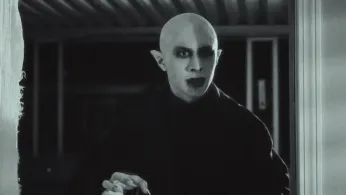
The video, released on Monday in early January 2026, is for Love Lucille’s song “Lights On On” and features Williams heavily made up as a pale, bald, long‑fingered creature reminiscent of classic silent‑era vampire Count Orlok. According to coverage by LGBTQ+ outlet Out Magazine, Williams stalks and bites a young woman in the video, merging vintage horror aesthetics with a knowingly theatrical, sensual performance.
Out Magazine reports that the clip quickly circulated across X , TikTok, and other platforms as fans shared screenshots and short clips of Williams in his vampire prosthetics and elaborate costume. The article notes that many viewers immediately responded with humorous, queer-coded nicknames for the character, labeling him “Dracula’s gay cousin” and “Yaaaaassferatu, ” emphasizing the camp appeal of his over-the-top, horror‑meets‑thirst aesthetic.
Heated Rivalry, the project that first brought Williams to a large LGBTQ+ fanbase, follows the intense relationship between rival hockey stars, and his character Shane Hollander is written and portrayed as openly gay. Out Magazine highlights that Williams has already earned a reputation for taking on explicitly queer roles and erotically charged photo shoots, which made fans particularly excited to see him lean into a different kind of fantasy as a queer‑coded monster.
In its coverage, Out Magazine frames the reaction as part of a broader trend of LGBTQ+ audiences reclaiming horror and monster imagery as sites of queer play, desire, and identification. Fans quoted in the piece and on social media describe Williams’s vampire as both unsettling and irresistibly attractive, underscoring how horror tropes can take on a camp inflection when filtered through queer aesthetics and fandom culture.
While mainstream music and entertainment outlets had not yet produced extensive coverage of the “Lights On On” video at the time of reporting, the viral reaction within LGBTQ+ online spaces has been substantial enough to generate dedicated features in queer media. Out Magazine’s piece, published on January 6, 2026, foregrounds how quickly Williams’s performance inspired fan edits and jokes, particularly comparisons between his co-star Connor Storrie and actor Sam Reid of the television adaptation of Interview with the Vampire.
The article also situates Williams’s latest turn within his broader pattern of embracing queer erotic fantasy on screen, including previous work in gay fairy-tale scenarios and steamy, homoerotic scenes in Heated Rivalry. For LGBTQ+ viewers, this continuity makes his vampire persona feel like a playful extension of an already queer-affirming career, rather than a departure from it.
From an LGBTQ+ cultural perspective, the viral moment underscores how queer fans actively shape the meaning of mainstream and indie content through meme culture, affectionate nicknaming, and humorous re-interpretation. By describing Williams as “Dracula’s gay cousin” and celebrating his look as “Yaaaaassferatu, ” online audiences are queering the iconography of the vampire—long associated with taboo desire and social transgression—in a way that centers queer pleasure and agency.
The enthusiasm around the “Lights On” video also reflects ongoing interest in explicitly queer narratives within genre media, from horror to sports drama. Williams’s popularity as a gay lead in Heated Rivalry, combined with the swift embrace of his monstrous new persona, highlights the appetite for LGBTQ+ storytelling that is unapologetically sensual, camp, and fun.
Although Love Lucille and Hudson Williams have not yet released extensive public statements about the creative intent behind the video, the production itself foregrounds visually striking queer-coded imagery, and its reception in LGBTQ+ media frames the project as a playful, affirming collaboration rather than a sensationalist or stigmatizing use of horror tropes. As the video continues to circulate, it is likely to remain a touchpoint in discussions about queer engagement with horror and the ongoing blurring of boundaries between fandom thirst, genre homage, and LGBTQ+ cultural expression.