5 hours ago
From Pageant Stages to Quiet Streets: Remembering Transgender Nightlife Icon Rachel Harlow
READ TIME: 4 MIN.
In the late 1960s and 1970s, few transgender women in the United States occupied the spotlight as visibly as Rachel Harlow, the Philadelphia-bred beauty whose elegance, charisma, and candor made her a symbol of possibility for many LGBTQ+ people navigating hostile social terrain. Long before social media and streaming, her image traveled through drag pageants, documentary film, celebrity nightlife, and local advertising campaigns, leaving a legacy that continues to resonate in contemporary conversations about transgender representation.
Harlow’s public life began almost by accident on Halloween night in 1966, when a cousin urged the then-teenager to enter a drag pageant at the L&M Ballroom at 69th and Market in the Philadelphia area. She won the contest, adopting “Harlow” in homage to 1930s film star Jean Harlow, and quickly became a fixture on the local drag circuit, entering and winning numerous pageants around the city.
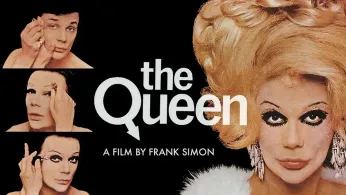
Her ambitions soon carried her to New York, where she competed in the 1967 Miss All-America Camp Beauty Contest, a drag pageant documented in Frank Simon’s film "The Queen". The documentary, released in 1968, introduced national and international audiences to Harlow’s poise and determination, capturing a backstage confrontation in which Crystal LaBeija challenged what she perceived as favoritism and unfair judging. As critics later noted, that moment became one of the film’s defining scenes, reflecting not only pageant politics but wider tensions around gender expression, race, and class in queer communities at the time.
According to independent trans history research compiled by the site "A Gender Variance Who’s Who", Harlow completed what was then described as “gender correction” in 1972, a process that made her one of the more publicly known transgender women in American nightlife during that era.
Following her pageant success, Harlow spent time in Hollywood, where director Henry Jaglom cast her in the 1971 film "A Safe Place", starring Jack Nicholson and Orson Welles. Reporting by "The Philadelphia Inquirer" notes that this role made Harlow one of the earliest out transgender women to portray a cisgender woman in a feature film, a casting choice that challenged prevailing expectations about who could appear on screen and how women’s bodies and voices were policed in the industry.
By the early 1970s, she had returned to the Philadelphia region and emerged as a nightlife star, especially in Center City and nearby New Hope, Pennsylvania. Friends and contemporaries recalled that when Harlow entered a restaurant or club, conversations often stopped as patrons turned to look, a reaction rooted as much in her fashion and charisma as in the rarity of openly transgender women occupying such glamorous public roles at the time.
Her career expanded beyond performing. She modeled clothing on the main floor of the prominent Philadelphia department store Wanamaker’s, long before the term “influencer” existed, and appeared in advertisements for local businesses such as the Society Hill salon Scissors Edge, where women reportedly asked stylists to copy her haircut after seeing her in person. These roles placed a transgender woman at the center of mainstream commercial imagery, offering a form of representation that was rare in that period.
Harlow’s most enduring contribution to LGBTQ+ cultural history may be her work in the club world, including a high-profile Philadelphia nightclub and, later, Harlow’s at The Bourse, a supper club she opened with her husband. Research compiled by "A Gender Variance Who’s Who" underscores that the earlier Philadelphia disco-nightclub associated with Harlow drew celebrities and served as a social hub where nightlife, fashion, and queer community overlapped.
As hostess, Harlow’s loosely defined role involved circulating through the club, greeting guests, and simply “being Harlow” in public, a visibility that simultaneously marketed the venue and normalized the presence of a glamorous transgender woman in upscale spaces. According to friends interviewed by "The Philadelphia Inquirer", her appearances at restaurants and other nightlife spots around the city were often part of a deliberate strategy to draw attention to the club, effectively turning her social life into a form of community-building and business promotion.
These spaces provided gathering points for LGBTQ+ people at a time when many faced discrimination in housing, employment, and public accommodations, even as they created room for experimentation in gender expression and fashion. Within this context, Harlow’s visibility carried significance beyond individual fame, helping carve out social environments where transgender women could be seen and affirmed.
In 1980, Harlow met French pastry chef Gérard Billebault, and the two married the following year, giving her the married name Rachel Billebault and introducing a period of quieter domestic life as a stepmother and hostess in their home. The couple returned to a more public-facing role in 1989 when they opened Harlow’s at The Bourse, a million-dollar supper club in Philadelphia that blended dining, performance, and nightlife.
Recent reporting by "The Philadelphia Inquirer" and accompanying video content from "The Philadelphia Inquirer" on YouTube indicates that, in later years, Billebault lived a relatively low-profile life, known by neighbors more for her day-to-day presence than for her prior stardom. Nonetheless, features in LGBTQ+-focused outlets and independent history projects continue to revisit her story, using her trajectory from pageant stages to neighborhood streets as a way to trace broader changes in transgender visibility and the politics of nightlife spaces.
For transgender people and broader LGBTQ+ communities reflecting on their history, Harlow’s life illustrates how individual presence in clubs, films, and advertisements can reverberate far beyond a single city or era, shaping cultural memory and offering models of resilience and self-definition amid shifting social norms.