6 hours ago
Friends and Fans Remember ‘Finding Prince Charming’ Star Chad Spodick After Confirmation of Cause of Death
READ TIME: 3 MIN.
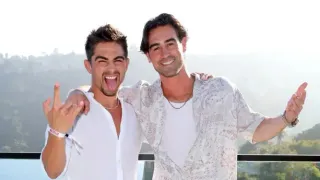
Former “Finding Prince Charming” contestant Chad Spodick is being remembered by friends, fans, and LGBTQ+ media after his family confirmed he died earlier this year from suicide. The reality TV figure, who appeared on the first season of Logo TV’s all-gay dating show in 2016, had previously been reported dead in April, but details around the circumstances were only recently shared publicly.
Spodick’s family and close friends organized an online memorial to celebrate his life and clarify misinformation that had circulated on social media following his death. According to reporting from LGBTQ+ outlet Attitude, they stated that Spodick died of suicide and emphasized that they wanted his story to be told accurately and compassionately, without stigma. Queerty also reported that those close to him stressed his warmth, humor, and loyalty, describing him as someone who deeply valued his friendships and queer community.
Chad Spodick came to public attention as a contestant on “Finding Prince Charming,” Logo TV’s attempt to create a gay counterpart to mainstream dating series such as “The Bachelor.” The show, which premiered in 2016 and starred Robert Sepúlveda Jr. as the central “prince,” featured a cast of gay men competing for his affection and was promoted as one of the first network dating formats centered entirely on gay men.
Although “Finding Prince Charming” ran for only one season, media commentators have noted that it played a role in expanding LGBTQ+ visibility in the reality dating genre, which had previously offered limited and often tokenized representation. Spodick’s participation in the series placed him among a small group of openly gay reality contestants whose dating lives and interpersonal dynamics were broadcast to a national cable audience, at a time when queer-led dating shows were still rare.
News of Spodick’s death earlier this year prompted tributes from viewers, fellow contestants, and LGBTQ+ media, with many remembering him for his charisma on-screen and his friendships off-camera. Coverage from Instinct Magazine described him as a “fan favorite” whose presence contributed to some of the show’s most memorable interactions. Queerty reported that friends used social media and digital memorial spaces to share photos and stories, emphasizing how much joy he brought to those around him.
According to Attitude’s reporting, the recent memorial also served as an opportunity for loved ones to push back against online speculation and to center Spodick’s life rather than the circumstances of his death. Contributors to the memorial highlighted his love of travel, his commitment to his friendships, and his willingness to be publicly visible as a gay man on television at a time when such visibility still carried professional and personal risks.
While Spodick’s family and friends focused primarily on remembering his life, his confirmed cause of death has also renewed conversations in LGBTQ+ spaces about mental health, substance use, and the unique pressures faced by queer people in public life. Advocacy organizations have previously documented how factors such as stigma, discrimination, and social isolation can contribute to higher rates of substance use and mental health challenges among lesbian, gay, bisexual, transgender, and queer people.
Although coverage of Spodick’s death has not detailed his private medical or therapeutic history out of respect for his privacy, journalists at Attitude and Queerty have framed his story within broader community calls for nonjudgmental support, accessible care, and destigmatizing conversations around addiction and overdose. Commentators have also noted that LGBTQ+ public figures, including reality TV personalities, can experience additional scrutiny and pressures associated with visibility, which may intersect with existing mental health vulnerabilities.
Spodick’s appearance on “Finding Prince Charming” placed him in LGBTQ+ pop culture history as part of one of the first gay-centric dating shows on a cable network, even as the series itself received mixed critical response and was not renewed. In the months since his death, tributes have increasingly focused less on the show’s controversies and more on his willingness to live openly and visibly at a time when such representation helped pave the way for later queer dating formats and streaming-era series.
Friends quoted by LGBTQ+ outlets have expressed hope that Spodick will be remembered not only for his reality TV role but also for his kindness, vulnerability, and the conversations about care, support, and community that his death has reopened. As those who knew him continue to share memories online, his story remains part of an evolving dialogue about how LGBTQ+ communities honor their members in life and in death, especially when confronting the realities of overdose and loss.