Nov 14
Political Notebook: 47 years post his death, Harvey Milk still roils US politics
Matthew S. Bajko READ TIME: 4 MIN.
Nearly five decades since the late gay San Francisco supervisor Harvey Milk’s political career was tragically cut short, the civil rights icon is still roiling politics in the United States. And it appears his hold on the country’s political discourse won’t be fading anytime soon.
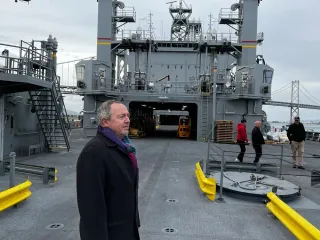
As the Political Notebook exclusively reported earlier this month, Milk’s legacy is set to have an impact on the 2028 presidential election. Current and former LGBTQ servicemembers are pushing to see any candidates running that year commit to naming a new naval vessel in his honor.
Dubbed the USNS Harvey Milk Lives! A National Campaign, the initiative is also calling on the candidates to confirm they will nominate a secretary of the navy supportive of making it happen. And the campaign also wants to see both the Democratic and Republican parties insert support for a Milk naval ship into their platforms adopted at their nominating conventions ahead of that November’s election.
“People will not forget about this, and we are going to be dogged about it until it happens,” said gay U.S. Marine Corps veteran Bob Lehman, 60, who is the California state chair for the Milk ship naming campaign.
It stems from the decision in June by Secretary of Defense Pete Hegseth to strip the USNS Harvey Milk of its name. He later rechristened the replenishment oiler the USNS Oscar V. Peterson in honor of a chief watertender killed in battle during World War II.
“They broke a tradition, and it is considered a bad omen and a curse if you strip a name off a Navy ship, which they did,” noted gay San Diego leader Nicole Murray Ramirez, who got to know Milk in the 1970s and first called for a naval ship to be named after him in 2011.
The move by Hegseth prompted a Utah state lawmaker in June to call for changing the name of Harvey Milk Boulevard in downtown Salt Lake City. In September, Republican Representative Trevor Lee introduced a bill to have the roadway be renamed in honor of the late conservative firebrand Charlie Kirk, who was assassinated over the summer at Utah Valley University in the city of Orem.
“From the vast majority of Utahns, they would say that Harvey Milk does not have any connection to Utah whatsoever,” Lee told the local ABC affiliate. “But Charlie Kirk does now, especially after being assassinated in the state of Utah.”
As News4Utah noted, neither Kirk nor Milk had direct connections to Salt Lake City. The station also questioned if state lawmakers have any jurisdiction over the naming of the city street, which was changed in 2016 in honor of Milk.
Talking to the Salt Lake Tribune in July, having screened the Oscar-winning documentary “The Times of Harvey Milk,” Salt Lake County Mayor Jenny Wilson told the paper she saw no reason to change the name of the street, as it is an “appropriate tribute” to Milk that should remain.
“This can be a challenging state, and I believe that it’s important to remember that we should love and support all members of our community,” Wilson said.
Because they don’t want to see Peterson be dishonored in the same manner as Milk, the leaders of the Milk ship naming campaign are asking for a different vessel to bear the gay leader’s name. Ahead of Veterans Day General Dynamics NASSCO, the company’s San Diego-based shipyard that built the oiler initially named for Milk, announced it has been awarded a $1.7 billion contract to construct two more John Lewis-class fleet replenishment oilers, T-AO 215 and T-AO 216.
They are the second and third ships to be built as part of an eight-vessel multi-ship contract the company received last year. Since 2016, NASSCO has been contracted to build 17 of the next generation fleet of oilers for the Navy, thus providing plenty of opportunity for another replenishment oiler to be christened the USNS Harvey Milk.
The rescission of the naming honor for Milk, who had enlisted in the Navy in 1951 and was later given an "other than honorable" discharge four years later, made global headlines and elicited outrage from elected officials on Capitol Hill in Washington, D.C. to San Francisco City Hall. Congressmembers Nancy Pelosi (D-San Francisco), Lateefah Simon (D-Oakland) and Mark Takano (D-Riverside), the gay chair of the Congressional Equality Caucus, were among the 70 members of Congress who had sent a letter to Hegseth demanding he reverse course.
“When the USNS Harvey Milk was commissioned in 2021, former Secretary of the Navy Carlos Del Toro rightfully acknowledged that, ‘for far too long, sailors like Lt. Milk were forced into the shadows or, worse yet, forced out of our beloved Navy. That injustice is part of our Navy history, but so is the perseverance of all who continue to serve in the face of injustice.’ Ordering this renaming and intentionally timing this announcement to coincide with Pride Month is a cruel insult to tens of thousands of LGBTQI+ individuals currently serving in our nation’s military and the nearly one million LGBTQI+ Veterans across the country,” stated the congressmembers in their letter.
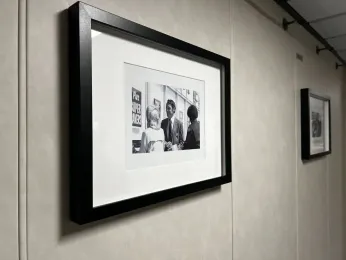
As the Bay Area Reporter first reported in February 2020, Milk accepted a forced resignation from the military on February 7, 1955 rather than face a court-martial due to having sex with other servicemembers, according to a trove of naval records obtained by the paper. Nonetheless, he spoke favorably of his time in the service and was wearing his U.S. Navy diver's belt buckle when he was shot dead.
Later made history
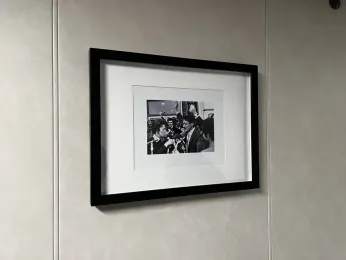
Twenty-two years after being drummed out of the military, Milk made history with his 1977 election to the San Francisco Board of Supervisors on his third attempt to serve on the city’s governing body. In doing so, the Jewish leader raised in New York became the first gay person elected to office in California.
Sadly, a year later Milk and then-mayor George Moscone would be assassinated inside City Hall on the morning of November 27, 1978. Their killer, disgruntled former supervisor Dan White, would further outrage the LGBTQ community when he used his now-famous “Twinkie defense” to avoid being found guilty of murdering the two progressive politicians.
Rather, a jury on May 21, 1979, a day prior to what would have been Milk’s 49th birthday found White guilty of two counts of voluntary manslaughter. The decision led locals to erupt in anger, damage the entrance to City Hall, and set a number of police cars on fire during what became known as the White Night Riots. After serving just five years in prison, White won his release and two years later died by suicide.
While White’s death 40 years ago on October 21 was largely overlooked last month, the lives of Milk and Moscone will be celebrated at the yearly vigil and candlelight processional held to honor their memories. The 47th Annual Vigil in Honor of Harvey Milk & George Moscone will take place from 7 to 8 p.m. November 27.
Hosted by the Harvey Milk LGBTQ Democratic Club, the gathering this year coincides with the Thanksgiving holiday. Attendees are asked to gather that evening at Harvey Milk Plaza, the parklet above the Castro Muni station at Castro and Market streets. Following remarks by invited speakers, those gathered will be asked to walk to 575 Castro Street where Milk operated a camera shop and had his campaign headquarters.
The public plaza named after him is set for a major renovation to make it more user-friendly and better honor Milk’s contributions to the local LGBTQ community and the neighborhood. A planned historical installation for the site is to feature a number of important LGBTQ residents of the Castro and city.
As Milk would often address those gathered at the site throughout the 1970s for protests and rallies, one feature of the redesigned plaza has been dubbed “The Pedestal.” As the project’s website explains, the raised platform to be built near the intersection of Castro and Market streets will serve as “a focal point for large gatherings and represents Harvey’s idea that each of us plays a role in the movement and that leadership arises from community – anyone can stand on the Pedestal and lead the way toward greater social justice.”
Milk’s various speeches received renewed attention this year in Thomas R. Dunn’s book “The Pink Scar: How Nazi Persecution Shaped the Struggle for LGBTQ+ Rights.” Released October 21, coincidentally on the anniversary of White’s death, by Penn State University Press, it is the first book in its Troubling Democracy series.
As the Political Notebook first noted last month, Dunn, a gay man, examined how different generations of American LGBTQ activists framed the atrocities unleased on queer and trans people by the Nazis in the 1930s and 1940s to advance their civil rights goals. The founder and director of the Queer Memory Project of Northern Colorado, Dunn dedicated an entire chapter to how Milk referenced the Holocaust in his public addresses during and after he won elected office.
Titled “Lambs to the Slaughter: Harvey Milk, Memories of Shame, and the Myth of Homosexual Passivity, 1977-1979,” the chapter takes a critical view of Milk’s contention that LGBTQ Germans and others reacted too passively and should have put up stronger resistance to Adolf Hitler and his Third Reich reign of terror. While Dunn understood why Milk used such rhetorical license in pushing his LGBTQ compatriots to come out of the closet and be more public in demanding their own rights, he also concluded Milk had done a disservice to those directly impacted by the Holocaust.
“In his remarks and other affiliated discourses, Milk indicted German homosexuals of the 1930s and ’40s for refusing to fight back, resist, or save themselves while standing face-to-face with the horrors of the Nazi concentration camps. Milk drew on the long, idiomatic history of the phrase lambs to the slaughter and conflated the Jewish and homosexual experiences of Nazi persecution to rhetorically reinvent these events and stir lesbian and gay mobilization,” wrote Dunn, who concluded, “this new approach forever changed how the lesbian and gay community remembered the Nazis’ homosexual victims.”
It is another example of Milk’s lasting legacy, and how 47 years after his death, his words and achievements continue to inflame passions and provoke debate. Such reactions and discourse factor into why Milk is as impactful today on the nation’s politics as when he first emerged onto San Francisco’s political stage decades ago.
Web Extra: For more queer political news, be sure to check http://www.ebar.com Monday mornings for Political Notes, the notebook's online companion. This week's column reported on a gay SF human rights commissioner receiving a lesser ethical fine than he initially agreed to pay.
Keep abreast of the latest LGBTQ political news by following the Political Notebook on Threads @ https://www.threads.net/@matthewbajko and on Bluesky @ https://bsky.app/profile/politicalnotes.bsky.social.
Got a tip on LGBTQ politics? Call Matthew S. Bajko at (415) 829-8836 or email [email protected].